
Furnace Blowing Lukewarm Air but Never Hot? What's Going On
August 5, 2026
Quick Answer: A furnace that runs but never gets properly hot is usually short on heat at the burner, losing that heat through leaky or uninsulated ducts, or running its blower on a schedule disconnected from the actual heating cycle. Common causes include a weak or partial flame from a dirty flame sensor or low gas pressure, a two-stage furnace stuck on its low-fire setting, ductwork that picks up cold air from an attic or crawlspace on the way to the room, and a thermostat fan switch left on instead of auto. Most of these are diagnosable, and fixable, without replacing the furnace.
You turn the thermostat up. The furnace kicks on, air comes out of the vents, and it's warm enough to notice, but it never gets hot. That's not the same as blowing cold air, which points somewhere else entirely. This is a house stuck in an in-between zone, where every register feels lukewarm at best and the temperature never quite climbs. The furnace is clearly running. It's just not finishing the job.
Lukewarm air that never turns into hot air tells you one of two things: the furnace isn't generating enough heat at the source, or it's losing the heat it does make before that air reaches you. Figuring out which one you're dealing with is most of the diagnosis, and each has its own set of causes.
Lukewarm Isn't the Same Problem as Cold
The fact that the air is warm, just not warm enough, actually narrows things down. A furnace blowing genuinely cold air usually means the burners never lit and only the blower is moving air. Lukewarm air tells you combustion is happening. The furnace is making heat, just not as much as it should, or that heat is getting watered down before it reaches you.
That distinction changes where you look. No heat at all points toward ignition failure or a gas supply problem. Weak, lukewarm heat points toward partial combustion, airflow carrying too much cool air alongside the warm, or a blower running on its own schedule instead of the furnace's.
Weak or Partial Combustion at the Burner
The most direct cause of lukewarm air is a furnace that isn't burning gas at full strength. It's making heat. Just not enough of it.
A flame sensor coated with residue
The flame sensor's job is to confirm a flame is present so the gas valve stays open. A sensor that's partially fouled, rather than fully failed, can allow a weak or unstable flame that never reaches normal combustion temperature, or it can cause the burners to modulate down when the system reads a marginal signal. The furnace keeps running, but the flame it's maintaining is smaller and cooler than it should be.
Low gas pressure or a partially restricted gas valve
If the gas valve isn't opening fully, or incoming pressure is low, the burners get less fuel than they're built to run on. Less fuel means a smaller flame and less heat transferred to the air crossing the heat exchanger, and that shows up at the vents as air that's warm instead of hot.
A two-stage or modulating furnace stuck on low fire
Plenty of newer furnaces run a low-fire stage for shorter or milder heating calls and only shift to high fire when the thermostat asks for more. When the control board or staging system stops switching up to high fire, the furnace runs indefinitely on its lower output. On a genuinely cold day, that output is noticeably milder than what the unit is built to deliver.
Not all burners igniting
A furnace typically fires several burner ports together. Dirt, corrosion, or a cracked burner can keep one or more of them from lighting, and the unit still runs, still makes heat, just less of it, spread across the same airflow. The result cools the output down toward lukewarm.
Ductwork Diluting the Heat Before It Arrives
Even a furnace producing a proper hot flame can deliver lukewarm air if the ducts between the furnace and the room aren't doing their part.
Ducts running through unconditioned space
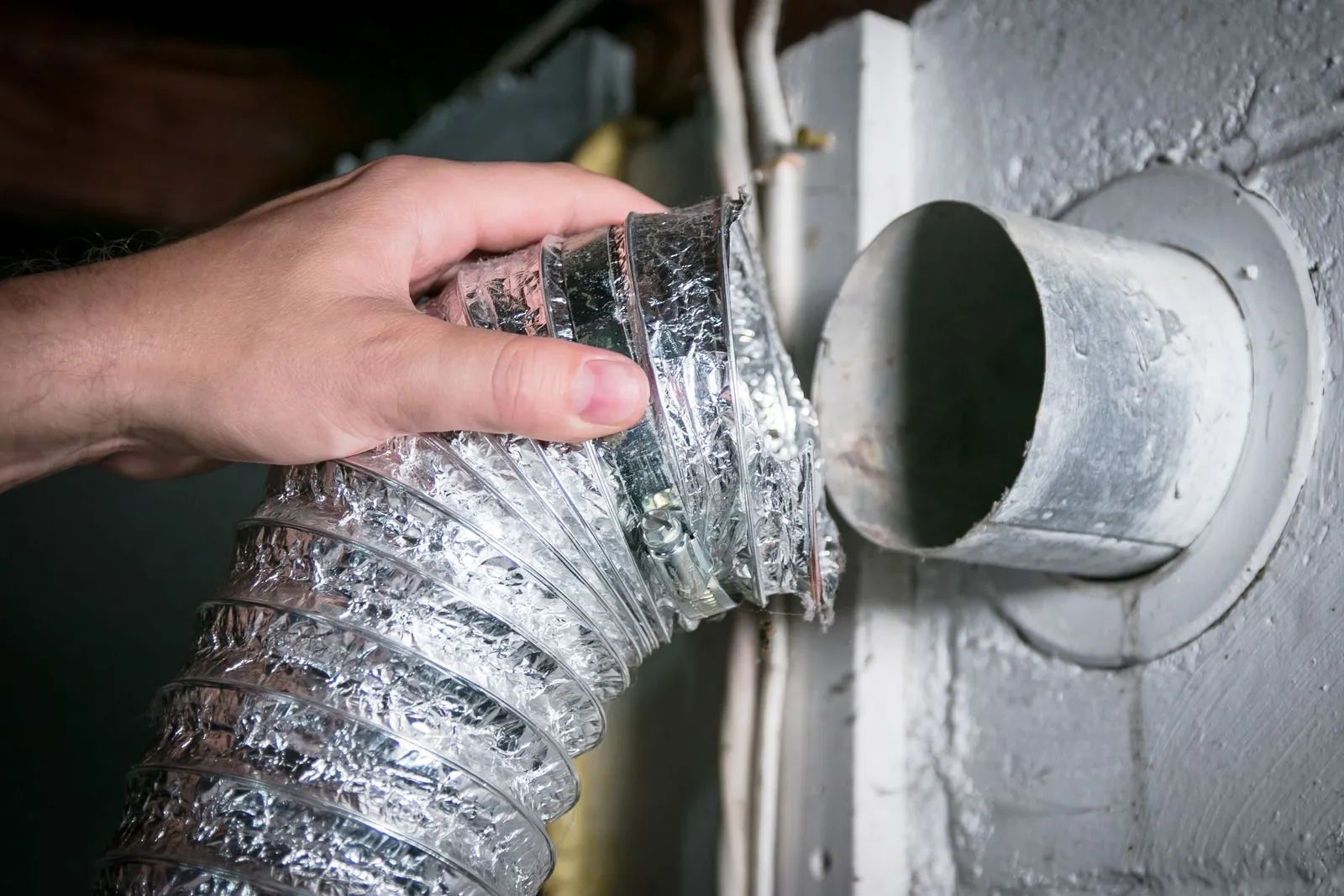
Supply ducts passing through an attic, crawlspace, or garage lose heat to the cold air around them, and that loss is worst on the coldest mornings, when the gap between the duct and its surroundings is greatest. Air that left the furnace properly hot can arrive at the register measurably cooler if the ductwork along the way isn't well insulated.
Leaks in the duct system
A supply duct with gaps at its joints pulls in cold air from an attic or crawlspace as air moves through it, mixing that cold air into the heated stream before it ever reaches the vent. The furnace did its job. The delivery system undid it.
Return air drawing in outside or unconditioned air
A gap in a return duct or return plenum can pull in cold air from outside the living space, mixing it into the air the furnace is about to heat. That lowers the starting temperature the furnace has to work with, and it lowers what comes back out the other end too.
Duct problems are easy to miss, because a technician who only checks the furnace itself will often find it running fine. It's the path between the furnace and the room doing the damage, not the appliance.
Tip: Check your thermostat's fan setting before anything else. If it's set to "On" rather than "Auto," the blower runs nonstop, including the stretches between heating cycles when the furnace isn't firing at all. That constant airflow feels like a steady stream of lukewarm air even though the furnace is heating normally in between cycles. Switching the fan to "Auto" so it only runs alongside the burners takes two seconds and rules out one of the easiest explanations first.
The Fan Setting and Thermostat Behavior
Past the fan switch itself, the way a thermostat manages the heating cycle can produce that same lukewarm sensation even on a furnace with nothing mechanically wrong.
Fan running independent of the burner
A fan left on continuous, as mentioned, circulates room-temperature or slightly warm air around the clock. Between burner cycles, that air is whatever temperature the ducts and house currently hold, not the hot output of an active burn, so it reads as lukewarm at the vent on a system that's otherwise fine.
A thermostat reading the wrong temperature
A thermostat mounted near a heat source, in direct sun, or in a draft can call for less heat than the house actually needs, cutting cycles short before the furnace ever reaches full output. Air coming out during that shortened cycle may never get as hot as it would on a longer, complete run.
Calibration drift
A thermostat's internal temperature reading can drift from actual room temperature over time, causing it to satisfy itself and shut off the call for heat earlier than it should. The effect is identical to a shortened cycle. A technician can check and correct this in a few minutes without touching the furnace at all.
A Tripped or Marginal Limit Switch
The high-limit switch protects the furnace's heat exchanger from overheating, and a limit switch that's marginal, rather than fully failed, can produce a lukewarm result in a less obvious way than the others on this list.
Restricted airflow, from a dirty filter, closed registers, or a struggling blower, can make the furnace overheat quickly. The limit switch responds by cutting the burners while leaving the blower running to pull air across the hot exchanger and cool it down. That blower-only airflow, moving across an exchanger that's no longer actively burning gas, feels lukewarm rather than hot, and it repeats every time the furnace tries and fails to complete a normal cycle. Unlike a full short-cycling pattern with obvious on-off clicking, this one can look more like a continuous stream of mild air, depending on exactly how the limit switch is responding.
Why Lukewarm Air Is Worth Diagnosing, Not Living With
A furnace stuck making lukewarm air is still running, still burning gas or drawing electricity, and still not delivering the comfort it should. That alone is its own kind of waste, before anything else gets worse. Weak combustion at the burner, whether from a fouled flame sensor, low gas pressure, or a furnace parked on low fire, tends to get more pronounced over time rather than fix itself. Ducts losing heat along the way waste energy on every single cycle, all winter long.
And a limit switch cycling in response to restricted airflow is protecting the furnace from a real overheating risk, one worth addressing at the source instead of tolerating as background noise. Most homeowners live with lukewarm air for a full season before calling anyone, assuming it's just how the furnace runs now. It usually isn't.
Warning: A cracked heat exchanger is a separate and more serious possibility a technician should rule out anytime a furnace is behaving abnormally, including running long without ever reaching full heat. A cracked exchanger can let combustion byproducts, including carbon monoxide, mix into the air your furnace is pushing through the house. If you notice a persistent odd odor near the unit, unusual soot, or family members getting headaches or nausea that ease once they leave the house, treat it as urgent. Shut the system down and have it inspected before running it again. This isn't a wait-and-see situation.
Frequently Asked Questions
Why does my furnace run for a long time but the air never feels really hot?
A long run with weak output usually means the furnace isn't producing full heat at the burner, from a fouled flame sensor, low gas pressure, or a two-stage unit stuck on low fire, or that the heat it makes is being lost through leaky, uninsulated ducts before it reaches the room.
Could my thermostat fan setting be the whole problem?
Yes, and it's the first thing worth ruling out. A fan set to "On" runs continuously, including between heating cycles, so you feel a steady stream of room-temperature air mixed in with the truly hot air from an active burn. Switching it to "Auto" fixes this immediately if that's all it is.
Is lukewarm air a sign of a cracked heat exchanger?
Not directly, but a cracked heat exchanger should be ruled out whenever a furnace is acting abnormally. If you notice an odd smell, soot near the unit, or headaches that ease when you leave the house, treat that as urgent and have it inspected before running the furnace again.
Does duct location really change how hot the air feels at the vent?
It can, quite a bit. Ducts running through an attic, crawlspace, or garage lose heat to the cold space around them, especially on the coldest days. Leaks along those ducts make it worse by letting cold air mix into the heated stream before it reaches you.
Why would my furnace only run on low heat instead of high?
Some furnaces have two heating stages and are designed to run on low fire for milder calls, shifting to high fire when more heat is needed. If the staging control isn't switching up properly, the furnace stays on its lower setting even on a cold day, and the air feels noticeably milder than it should.
When does lukewarm air mean I need a technician instead of checking it myself?
Once you've confirmed the fan is set to "Auto" and the filter isn't clogged, the remaining causes, weak combustion, duct losses, a marginal limit switch, or thermostat calibration, need a technician to sort out. Any odd smell, soot, or symptoms like headaches point to calling one right away.
Restoring Consistent Heat Throughout Your Entire Home
A furnace that never moves beyond lukewarm air is rarely doing exactly what it was designed to do. Whether the issue begins with weak burner performance, heat escaping through ductwork, thermostat behavior, or airflow restrictions, each possibility affects how much warmth ultimately reaches your living space. Warner Heating & Air Conditioning has spent 35 years helping homeowners throughout Riverton, UT, identify these kinds of performance problems by looking at the entire heating system instead of assuming the furnace itself is failing.
Finding the real source of lukewarm airflow prevents unnecessary repairs and helps restore the level of comfort your heating system was built to provide. Small issues like incorrect fan settings or dirty filters are simple to correct, while more technical concerns involving combustion, staging controls, or duct performance require a closer evaluation. Addressing the underlying cause early also helps improve efficiency, reduce unnecessary system strain, and keep your
furnace
operating reliably throughout the heating season.